A cramped apartment or a corner of a shared living room can still host a focused, ergonomic workspace. The trick is choosing a wfh desk that respects your square footage without sacrificing posture, cable sanity, and that feeling of “I can get real work done here.” I’ve set up more small home offices than I care to admit, from a galley-kitchen nook best wfh desks to a windowless alcove under a staircase. The best desks for tight spaces share a few qualities: a precise footprint, reliable stability, intelligent cable paths, and just enough storage to keep surfaces clear. The rest is restraint.
Below are desk types I’ve tested or specified for clients in apartments and compact homes, with real dimensions, trade-offs, and the edge cases that decide whether something becomes a daily joy or a constant compromise.
The geometry of small spaces
Start with measurements, not mood boards. In a studio or secondary bedroom, 30 inches of depth often crowds walkways and competes with door swings. I look for 18 to 24 inches of depth, and a width between 30 and 48 inches to fit a standard wall segment without blocking outlets. A compact home office desk that measures 40 by 20 inches typically lands in the sweet spot for laptops and a single external monitor. If you run dual displays, a 47 by 24 inch surface makes life easier, but you can maintain sightlines by mounting one panel vertically on an arm.
Cable routing matters more when every inch is visible. A simple grommet and an under-desk tray reduce the visual clutter that makes a small room feel busy. An ergonomic desk for home use should still hit a 28 to 30 inch surface height for sitting, and if it adjusts for standing, 38 to 50 inches covers most people. If you’re under 5'4" or over 6'3", verify height ranges before buying; a few entry-level frames top out too low for taller users.
The minimalist wfh desk that actually works
Minimalist does not mean spartan to the point of frustration. A clean surface with two disciplined storage moves protects your workflow: a shallow, central drawer for small items and a discreet rail or hook for headphones and cables. I’ve had good luck with desks that use a 0.7 to 1 inch thick top and steel legs that meet in the corners. That shape resists wobble better than a pedestal, particularly on wood floors.
Don’t be seduced by ultrathin tops under half an inch paired with long spans. They flex. Flex translates to jittering monitors and a keyboard that bounces while you type. Similarly, hairpin legs look airy but amplify wobble at standing heights. If you want minimalist lines with stability, look for square-section legs or an H-frame stretcher that sits back from your knees. If the retailer doesn’t list a weight rating, expect around 50 to 80 pounds on compact fixed-height models. That’s enough for a laptop, a 24 to 27 inch monitor, and a lamp. Heavier speakers or a big ultrawide call for a sturdier build.
Foldable wfh desk: friend, not forever
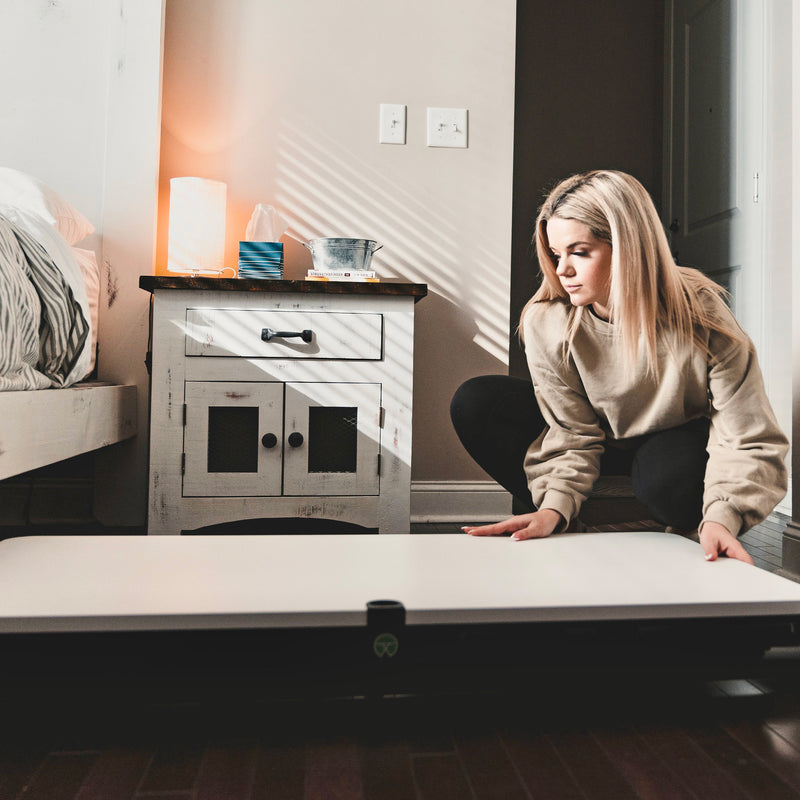
A foldable wfh desk solves a real constraint: no dedicated room and a living area that serves multiple purposes. I keep a folding unit for client visits at home when I need a second station. The hinges matter. Cheap hinges loosen after a few dozen cycles and introduce a side wobble that you feel while typing. Look for a foldable frame with cross-bracing and a locking mechanism that clicks into position with minimal play. Weight tells you something: under 20 pounds is easy to move, but often wobbly. Between 22 and 35 pounds usually signals thicker tubing and a more stable top.
Expect trade-offs. You rarely get integrated cable management, depth options are limited, and the surface material usually scratches more easily. If you rely on a monitor, pick a foldable top at least 20 inches deep so the stand sits safely behind your keyboard. Also note seat pairing: dining chairs often sit lower than office chairs. Check the chair height against the desk when folded out. Your elbows should be roughly at 90 degrees while typing, not reaching up.
The compact wfh standing desk that doesn’t hog space
Standing desks get a bad rap in small rooms because people picture heavy frames and deep tops. But a wfh standing desk with a 40 by 24 inch top and a dual-motor frame can fit comfortably in a bay window or between bookcases. The keys: column shape, foot length, and controller placement. Rectangular columns with a 2 or 3 segment design glide more smoothly. Foot depth around 23 to 27 inches prevents tipping without sticking out into the room. I prefer a handset with a slim profile on the underside so your thigh doesn’t bump it when you swivel.
Noise matters at home. Frames range from a soft hum to an audible whirr. If you share a space or take calls early, look for listed noise under 50 dB. Duty cycle affects reliability too: many budget frames require a rest after a few up-down cycles to cool. If you adjust positions many times per day, a higher-rated controller pays dividends.
Power strips and cable snakes are not optional here. With movement comes slack management. I’ve had clients be wary of drilling into the underside, so for rentals, use adhesive-backed trays and channel raceways. Run a single power cord to the wall from a mounted strip to eliminate the spaghettis-on-the-floor look.
Narrow desks for hallway nooks
Hallway stations can pull a surprising amount of work if the desk is the right shape. A small work from home desk with 18 inch depth keeps the pass-through clear, and a width around 36 inches aligns with common stud spacing if you need to anchor a hutch or shelf above. For desk legs, tapered or splayed legs can trip ankles in tight corridors. Go straight and blunt at the corners, or mount a wall-attached console with two front legs.
Lighting is the silent complication. Many hallways lack an outlet or ceiling fixture within reach. A clamp-on LED with a swiveling head saves space and avoids the flicker that tires eyes during video calls. When possible, I mount a tiny pegboard panel above the desk to hold a handful of tools and a plant. It adds vertical storage without turning the area into a closet.
Corner choices and L-shapes, scaled down
Traditional L-shaped desks dominate big home offices, but they can overwhelm a small room. I still recommend a compact home office desk in a corner when the second leg is short by design. Think 40 inches on the main side, 28 inches on the return, both 20 to 22 inches deep. The return becomes printer and charging real estate, keeping your main surface clear.
Beware the internal corner cutout on cheap L-desks. If the angle eats into your keyboard space, your shoulders will hunch all day. Better yet, create a pseudo-L by pairing a main desk with a rolling file or 16 inch deep side table. Roll it in for equipment days, roll it out when you want to breathe.
Adjustable desk for home office: where to spend, where to save
If you plan to sit and stand, spend on the frame and save on the top. A sturdy adjustable desk for home office use is a long-term asset, and laminated or bamboo tops can be swapped later. For stability, check for published wobble or lateral load testing. Retailers seldom share that, so read weight ratings with skepticism and search for user videos that show shake at standing height. A desk that carries 150 pounds statically might still shimmy if the crossbar is poorly placed.
Programmable height presets sound like fluff until you realize how often you avoid standing because you have to hunt for the same height. I set clients at three marks: sit, stand with flats, stand with house slippers if they wear them. Small habit, big compliance. Add a compact balance board or a thick anti-fatigue mat to keep your calves from locking up when standing on hardwood or tile.
Storage that doesn’t swallow the room
Low drawers are tempting, but in tight spaces they turn into knee bashers. I opt for one shallow pencil drawer and then wall-mounted solutions for the rest. A floating shelf at 12 inches above the desk edge holds notebooks and a small speaker, and stays out of the camera’s eyeline. If you need paper files, a rolling pedestal that tucks under a 24 inch deep desk can work, but measure leg clearance. You’ll want at least 20 inches from drawer face to the back wall for your knees.
Under-desk mounts for power strips and a two-tier cable tray consume little depth while cleaning the view. Keep peripherals wireless where possible. A minimalist wfh desk benefits more from fewer cords than from pristine lines alone.
Real-world matchups: five compact desks that punch above their size
I keep notes on models that behave well in apartments. Prices and availability fluctuate, so treat these as types and targets.
- Best small work from home desk for laptops and a single monitor: a 40 by 20 inch fixed-height desk with steel legs and a central drawer. You’ll find versions under many house brands. Look for corner-to-corner leg placement, a grommet hole, and surface edges that aren’t knife-sharp. Expect 30 to 35 pounds of total desk weight and a 100 pound static rating. Best compact standing option: a 40 by 24 inch dual-motor frame with a simple rectangular top. Avoid C-legs, which wobble more on carpet. Prioritize a handset with at least two presets. Good frames climb at roughly 1.2 to 1.6 inches per second without shaking cameras during calls. Best foldable wfh desk: a 36 to 40 inch wide folding table with a cross-braced steel frame and locking levers. Bonus points for a slightly textured laminate that hides scuffs. Accept that you’ll add a clamp-on power strip and an external stand for your monitor. Best minimalist wfh desk with storage: a 42 by 22 inch wood or laminate surface with a slim pencil drawer and a back lip that prevents pens from rolling off. The back lip also hides cable clips and LED strips. Best adjustable desk for home offices with sloping floors: a dual-motor frame with leveling feet that allow fine adjustment of each leg. Old buildings rarely have perfect floors. Leveling prevents that annoying desk rock you notice every time you lean.
The throughline: pick the smallest footprint that doesn’t limit your body. If your shoulders flare outward because the keyboard and mouse are cramped, size up in width by at least 4 inches. The comfort gains dwarf the space cost.
Cable discipline and camera angles
Even the best work from home desk looks chaotic with cables draped and webcams pointing at clutter. In small rooms, your background is closer and less forgiving. I run one of two setups. For open walls, I mount an adhesive raceway that runs from the desk underside to just above the baseboard, then paint it to match. For rentals, I use a freestanding cable sleeve and park a plant or a floor lamp in front of it. Keep the desk itself clear by fastening cables to the underside every 6 to 8 inches. Velcro beats zip ties when you inevitably re-route.
Camera height matters more than people think. A laptop perched on a 2 to 4 inch riser aligns the lens closer to eye level without forcing a standing desk move. If you use a tiny desk, a compact monitor arm frees space by moving the stand footprint off the surface, but check clamp clearance. Many compact tops sit only 1 inch thick, and some overhangs are too shallow for a standard clamp. In that case, a grommet mount can save the day.
Seating synergy in tight quarters
It’s easy to obsess over the desk and neglect the chair. With a petite desk, armrest height becomes the quiet saboteur. If the chair arms hit the desk edge, you’ll sit farther back and hunch forward. Either choose armless seating or adjustable arms that drop to clear 25 to 26 inches. On carpet tiles or rugs, use a hard chair mat that fits just under the desk footprint to prevent chair casters from carving ruts.
Knee clearance often decides whether a compact layout lasts. Aim for at least 18 inches of legroom depth, measured from the front edge to the nearest obstruction. Many “cute” desks fail here once a drawer is factored in. If your thighs brush the drawer when you cross your legs, that annoyance will become a habit of sitting skewed to one side. That habit becomes back pain. This is the price of ignoring ergonomics in the name of minimalism.
Workflow zones on a small surface
On a 40 by 20 inch desk, every inch works harder. I carve the surface into zones. The primary zone sits directly in front of you with the keyboard and trackpad or mouse. A secondary zone to the right holds a notepad and pen. The top edge is for reference items that rarely move, like a compact speaker or a plant. If you use a tablet for notes or calls, park a low stand just behind the keyboard and slide the tablet forward when needed. This choreography keeps reach distances consistent so your shoulders don’t wander.
A small tray or valet placed at the far corner catches keys, earbuds, and cards. It might sound indulgent, but it rings fence on your surface. Without it, tiny items spread until your mouse has nowhere to live.
When custom beats off-the-shelf
If your space has quirky dimensions, a custom top on a stock frame can deliver a perfect fit without boutique pricing. Many lumber yards offer precut birch or rubberwood panels in 18 to 24 inch depths and 36 to 48 inch widths. Finish them with a hardwax oil that resists water rings. Pair the top with a mid-range standing frame or fixed legs with threaded inserts. You get precise depth for a tight walkway and a surface that matches other wood tones in your room.
For wall-mounted desks, a fold-down panel with piano hinges can create a workstation that disappears after hours. The risk is load. If you plan to mount a monitor, reinforce into studs and use a torsion box design to prevent sagging. I’ve had tenants ask for removable solutions, so we’ve used French cleats screwed into studs and the desk panel hanging on the cleat. It lifts off when you move, and the wall only shows a few holes.
The unexpected hero: a rolling return
One of the most flexible upgrades for a small work from home desk is a rolling cart at the same height as your surface. On work-heavy days, pull it close to expand your elbow room or hold a printer. During calls, push it away to widen your camera frame. Look for locking casters and a depth that doesn’t trap your chair. I often match the top material to the desk for a unified look. The cart can tuck into a closet when company comes over.
Material choices that age gracefully
In tight spaces, surfaces take more abuse. I avoid glossy finishes that show every fingerprint. Matte laminates, textured melamine, or oiled wood hide wear. For wood, a mid-tone hides dust better than very light or very dark. If you enjoy the warmth of wood but work with coffee and pens, add a thin, clear desk pad that covers only the primary zone. Replace it yearly and the desk looks new.
Metal frames in black look sharp but show dust and lint. If you can, choose grey or white. On hot days, wrists resting on black absorb heat from sunlight faster than you think. Small detail, but noticeable in west-facing rooms.
Sound and sightlines in multipurpose rooms
If your desk lives in a living room, embrace separation tactics that don’t eat space. A 24 inch wide bookshelf placed perpendicular to the wall can serve as a visual divider without blocking light. Place the desk behind it to keep work out of immediate view from the sofa. Soft surfaces around the desk, like a small rug or curtain nearby, tame echo for calls. With compact desks, microphones sit closer to the wall and pick up slap-back reflections more readily. A simple felt panel or canvas on the wall behind the monitor helps.
Sightlines affect peace of mind. If your desk faces a wall, mount art or a corkboard at eye level. If it faces a window, add a translucent shade to cut glare. Most small tops can’t spare room for a large desk lamp, so use a compact, dimmable lamp with a low base or a clamp. Warmer color temperatures in the evening reduce the “I’m still at work” feel.
Budget, durability, and the false economy of flimsy
Cheap desks have their place, particularly for temporary setups or guest stations. But flimsy hardware becomes a daily tax in small spaces where every rattle is noticeable. Screws that bite into particleboard and then strip, cams that loosen, legs that twist out of square, all become micro annoyances that chip at focus. Spending a bit more for solid joinery and a reliable frame prevents an upgrade cycle that costs more over two years than buying the right desk once.
That said, spend with intent. If you never stand to work, don’t buy a wfh standing desk because it seems modern. If your workflow is laptop-first with occasional external display use, a simpler fixed-height desk with good cable management will feel calmer and cost less. The best desk for working from home is the one that aligns with your habits in your exact square footage.
A compact buyer’s quick filter
Use this to sanity-check options before you commit.
- Depth between 18 and 24 inches for tight rooms, 24 inches if you use a full-size keyboard and monitor arm. Width between 36 and 48 inches to fit common wall spans without crowding outlets. Stability markers: corner-mounted legs or a solid H-frame, listed weight rating over 80 pounds for fixed desks, dual motors and leveling feet for standing frames. Cable plan: at least one grommet or included tray, plus room to mount a power strip under the top. Ergonomics: desk height near 29 inches for sitting, standing range that reaches your elbow height, and sufficient knee clearance with any drawers installed.
If a desk fails two of those checks, keep looking. The right shape shows up more often than you think.
Living with less, working with more
A small desk disciplines decisions. You stop parking piles. You choose one or two tools that earn their space. You notice what slows you down, whether it’s a sticky drawer or a wobble at standing height, and you correct it. I’ve watched clients grow more consistent in their routines simply because their desk no longer argues with their body or their apartment. The square footage didn’t change. The friction did.
Whether you go minimalist, foldable, or fully adjustable, choose the compact home office desk that matches your space and your rhythms. A modest footprint can deliver professional comfort when the details are right: precise dimensions, unshakable stability, tidy cables, and a layout that feels intentional. Fit the desk to your life, not the other way around, and a small corner becomes a reliable launchpad for deep work.
2019
Colin Dowdle was your average 25-year-old living in an apartment with two roommates in the Lincoln Park neighborhood of Chicago.
All three would occasionally work from the apartment. The apartment was a challenging environment for one person to work remotely, adding two or three made it completely unproductive. A few hours of laptop work on a couch or a kitchen counter becomes laborious even for 25 yr olds. Unfortunately, the small bedroom space and social activities in the rest of the apartment made any permanent desk option a non-starter.
Always up for a challenge to solve a problem with creativity and a mechanical mind, Colin set out to find a better way. As soon as he began thinking about it, his entrepreneurial spirit told him that this was a more universal problem. Not only could he solve the problem for him and his friends, but there was enough demand for a solution to create a business.